EU Seeks to Tighten Squid Import Controls, with China's Distant-Water Fishing Fleet in the Crosshair
The New EU Proposal on Squid Import Controls
On 13 July, the EU Market Advisory Council (MAC) and the Long Distance Advisory Council (LDAC) jointly submitted a recommendation to EU member states and the European Commission, calling for strengthened import controls and greater transparency in the global squid supply chain. China's distant-water fishing fleet was explicitly identified as a primary target for scrutiny.
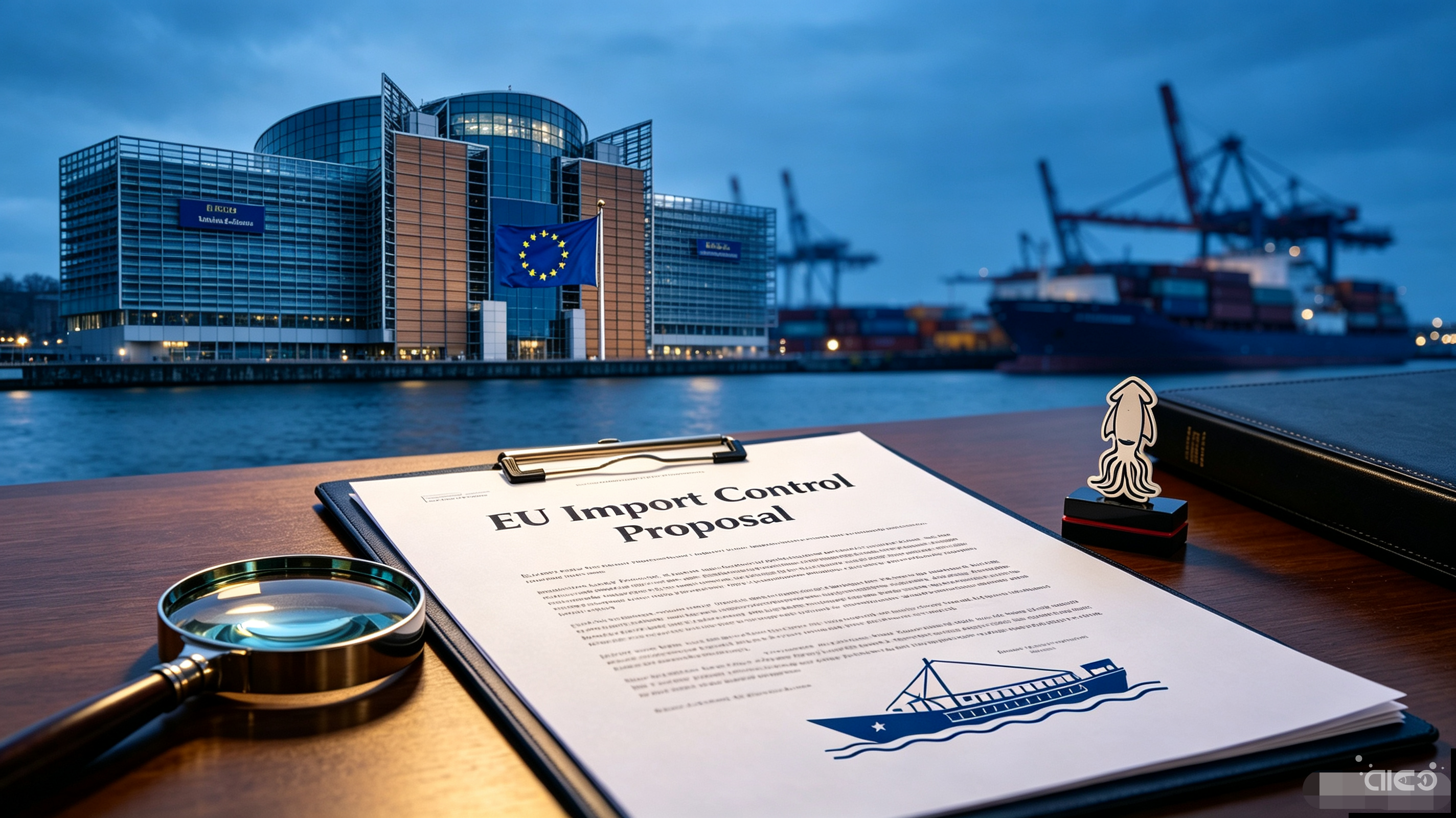
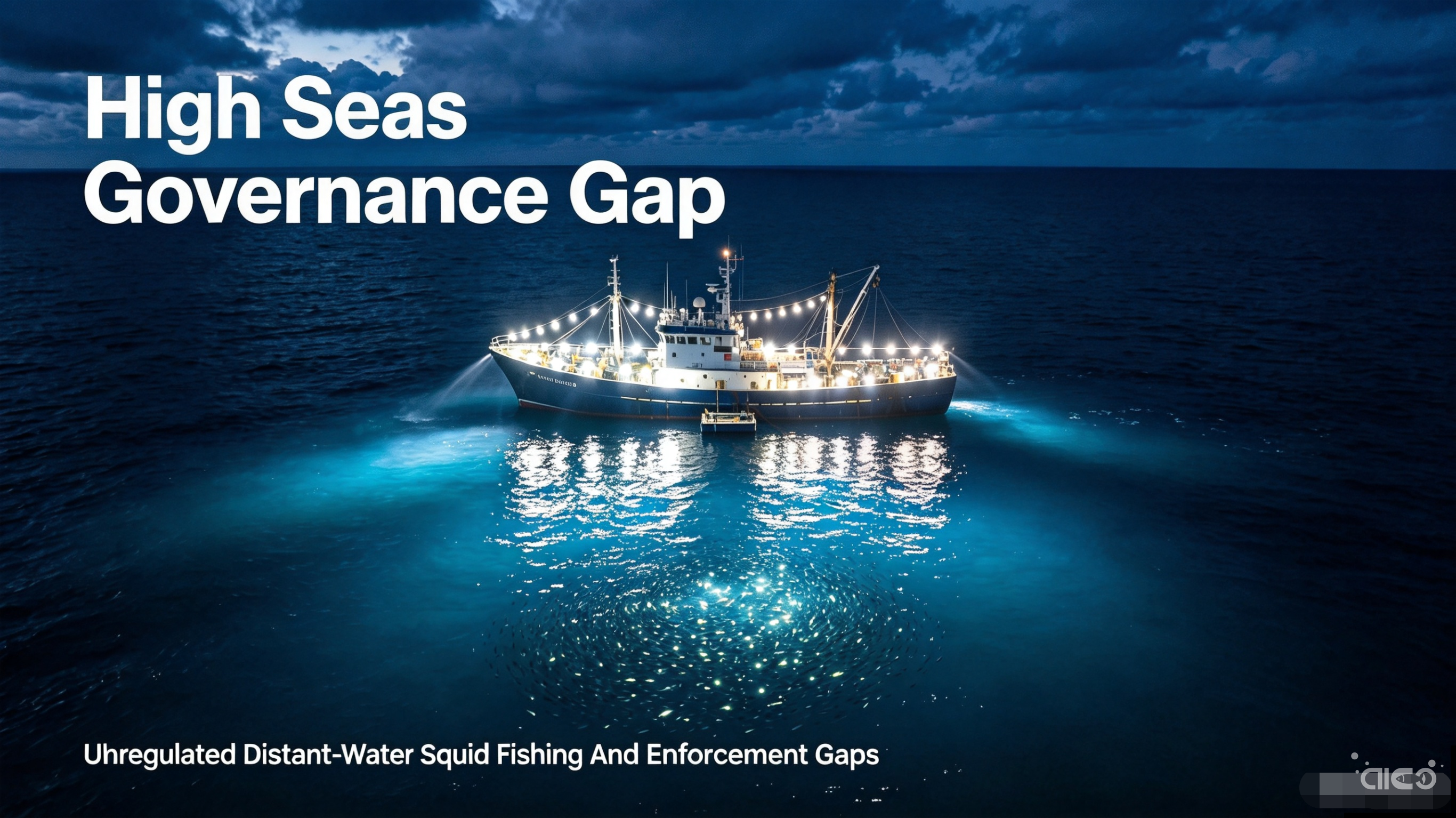
Gaps in High Seas Governance and "High-Risk" Fleets
In their recommendation, the two advisory bodies noted that global distant-water squid catches and landings have grown significantly in recent years, with most fishing activities concentrated in high seas areas. They highlighted fragmented governance frameworks, serious gaps in monitoring, enforcement and supply chain traceability, along with concerns over IUU fishing and human rights issues such as forced labour and unsafe working conditions. The recommendation singled out China's distant-water fleet as the largest source of the surge in global squid fishing pressure, while the Japanese, South Korean and Taiwanese fleets were also placed on the watch list. Four core measures were proposed: enhanced inspections, audits and investigations for squid shipments from China and high-risk fleets; prioritised inspections of vessels operating in unregulated areas; strengthened flag state responsibilities of third countries over high seas squid fishing vessels, including international labour and human rights obligations; and the promotion of a regional fisheries management organisation (RFMO) in the Southwest Atlantic to fill the high seas governance gap.
MAC Chair Yobana Bermúdez stated that the EU, as the world's largest import market for squid and cuttlefish, should prohibit products linked to verified illegal fishing or forced labour practices from entering the EU. LDAC Chair Iván López stressed that the EU must enforce existing regulations uniformly across all member states and, by strengthening import controls and traceability, ensure that imported squid is not associated with illegal fishing or environmental damage.
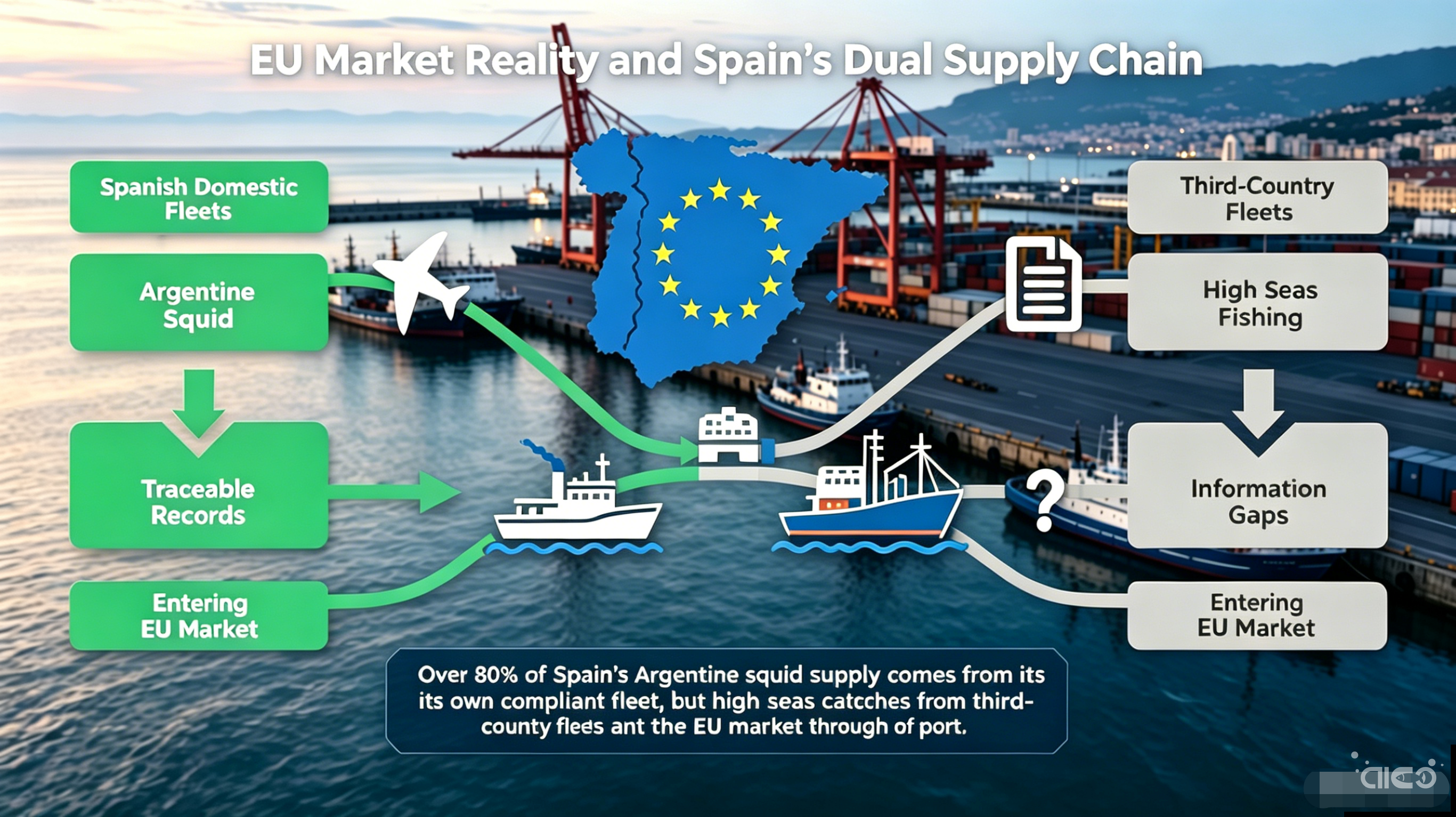
The EU Market Reality and Spain’s Dual Supply Chain
The EU is the world's largest importer of squid and cuttlefish products, with Spain serving as the main entry point, where Argentine shortfin squid and Peruvian squid account for the bulk of imports. The two bodies explained in their background document that over 80% of Spain's Argentine shortfin squid supply comes from fishing operations in the Southwest Atlantic conducted by Spanish-flagged vessels and joint ventures, managed through catch certificates under the EU IUU Regulation, with a relatively high degree of supply chain compliance. However, Spanish ports also receive squid products caught in the high seas by third-country fleets, including China's distant-water fleet. Once these supplies enter the EU single market, the actual level of inspection and documentation traceability standards vary between member states.
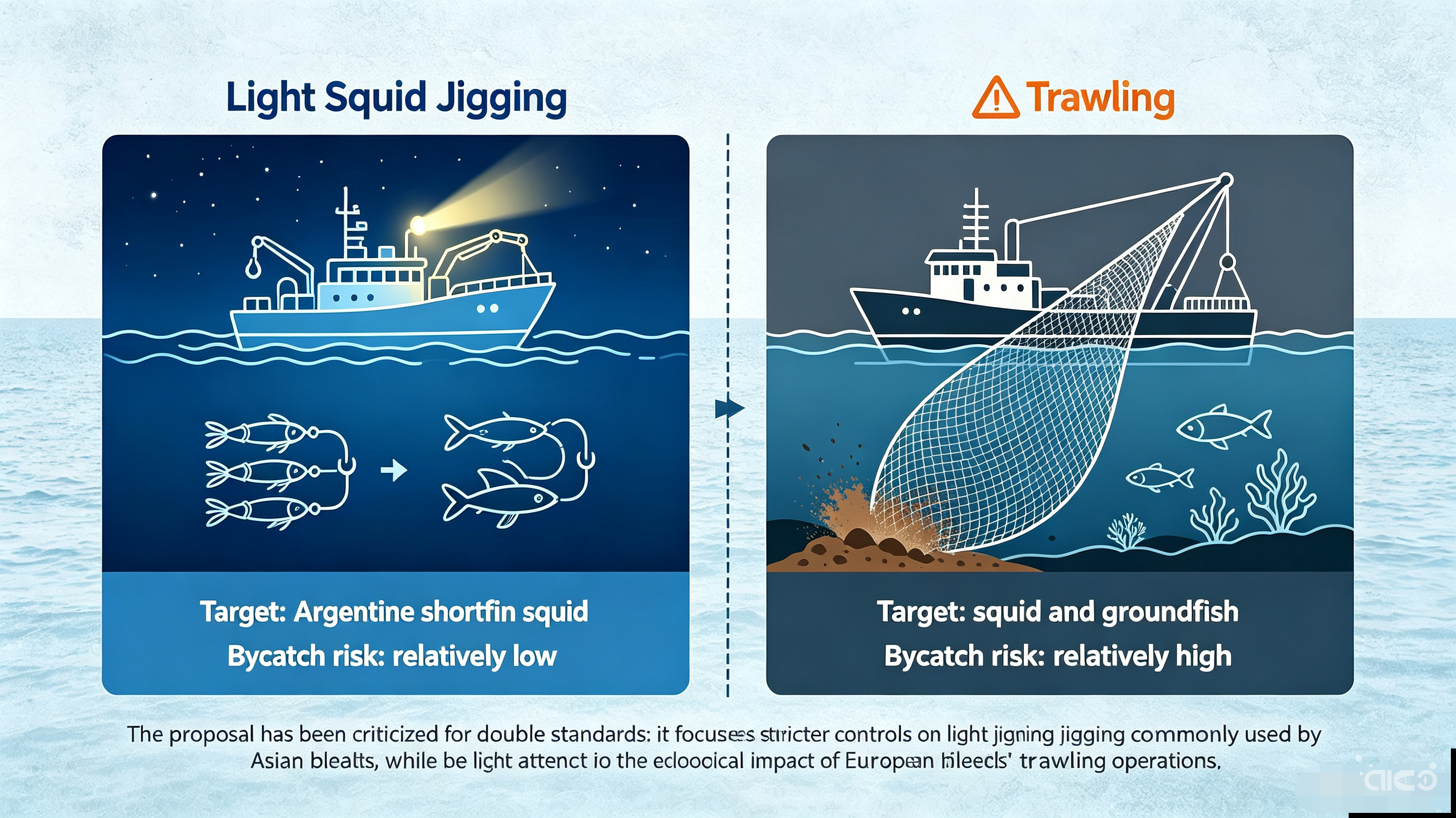
The Criticism: Double Standards on the High Seas
A critical analysis published on 27 July challenged the recommendation. The analysis pointed out that in the high seas of the Southwest Atlantic (the area beyond Argentina's 200-nautical-mile limit), more than 42 Spanish-flagged trawlers are targeting Argentine shortfin squid, operating in the same unregulated waters as the Asian fleets. Spain and the EU have not, as required by the United Nations Convention on the Law of the Sea, established a formal reporting or joint management mechanism with Argentina for straddling fish stocks. Spanish-flagged and Spanish-backed vessels have previously been penalised by Argentine authorities for illegally entering Argentina's exclusive economic zone and for switching off their Automatic Identification Systems, incidents that have also prompted complaints from the European Commission and NGOs such as Oceana.
The critical analysis argued that the recommendation designates Asian jigging as a key target for regulation, while failing to issue an equivalent risk warning regarding the bottom and mid-water trawling methods employed by European trawlers in the same unregulated high seas or the ecological impacts of these methods. When referring to the compliance record of the Spanish fleet, the recommendation conflates licensed fishing within the Falkland Islands' exclusive economic zone with unregulated high seas operations, sidestepping the fact that the high seas component likewise lacks a management framework.
The Legitimacy Test for EU Normative Power
Whether the EU's normative authority in the global squid trade gains broad acceptance, the analysis concluded, hinges on whether it can apply the same standards to all fleets operating on the high seas.
The MAC comprises 77 organisations from 13 member states, while the LDAC consists of 55 organisations from 11 coastal member states; both bodies are co-funded by the EU. The joint recommendation remains a policy proposal submitted by advisory bodies to the European Commission and member states and has yet to enter the EU legislative process.

Latest News
-
 The Rise of the Emerging Big Four: Global Warming and the New Landscape of FisheriesTraditionally, the four most famous fishing grounds in the world are the Hokkaido fishing grounds in Japan, the Newfoundland fishing grounds in Canada, the North Sea fishing grounds in the United Kingdom and the Peruvian fishing grounds in Peru. These fisheries are famous for their rich fishery resources and unique reasons for their formation. Nowadays, with global warming and changes in fishery resources, the emerging four major fishing grounds are gradually replacing the traditional fishing grounds as the new fishing centres.
 -
 Oceanic squid prices accelerate as market continues to heat up in March 2024In March 2024, according to the data observation of Zhejiang Zhoushan International Agricultural Products Trade Centre Co., Ltd: from the operation of the monthly price index, the monthly price of China ocean-going squid continued to rise in March 2024, with the index closing at 175.78 points, up 5.90% year-on-year, continuing the trend of high growth in February; from the operation of the weekly price index, the prices of the weeks in March continued to rise, of which the third weekly price increase was Obviously, the index was 166.09 points, up 6.07%, the fourth week of increases narrowed.
 -
 Will you attend World Seafood Shanghai 2025 during Aug 27-29?Will you attend World Seafood Shanghai(SIFSE) 2025 during Aug. 27-29? Please contact us to arrange a meeting there. See you soon.
 -
 Argentine squid is experiencing significant growth in the Chinese marketChina imported a record 12,542 tonnes of frozen squid from Argentina in May this year, with a total value of $42.5 million, according to the latest data from Chinese customs. The surge was attributed to heavy fishing by Argentine fishing vessels, which in the first half of 2024 in reached 153,000 tonnes, up 54% year-on-year.
 -
 The U.S. Demand for Seafood Depends on Overseas ImportsThe United States relies on overseas imports for much of its seafood needs, a situation that has persisted for more than three decades. According to U.S. government data, about 80 percent of seafood consumption comes from abroad, resulting in a seafood trade deficit that has become the norm.
